
Non-invasive brain stimulation in Calgary
Explore a New Approach to Mental Wellness
Looking for information about Exomind TMS Therapy in Calgary? Be Well Psychology believes that mental wellness starts with understanding your unique needs, experiences, and goals.
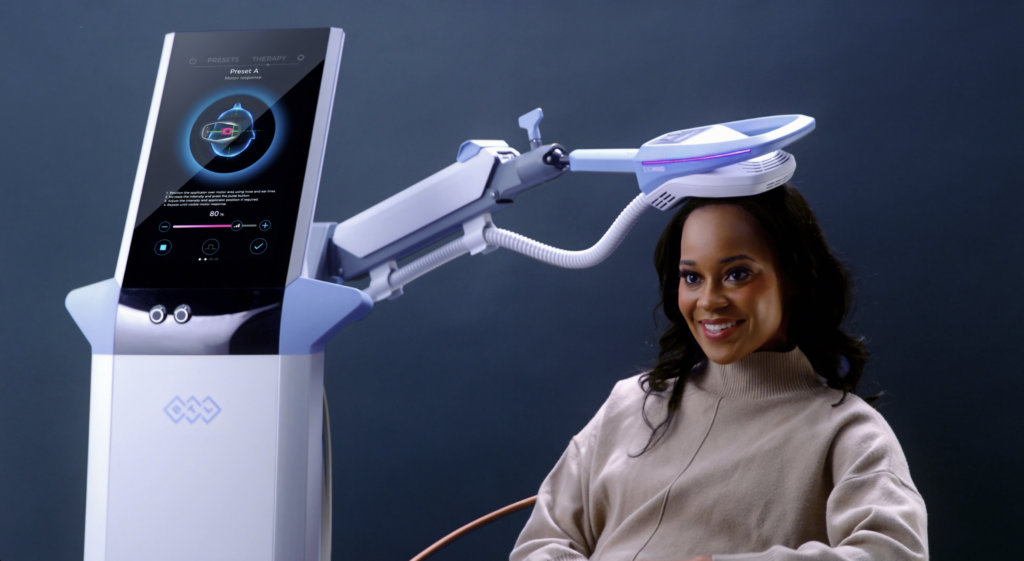
Exomind™ is a brain stimulation technology that uses magnetic pulses to target specific areas of the brain. It offers a non-invasive approach to brain stimulation, with treatment suitability depending on individual needs and clinical guidance.
If you are exploring different options for mental wellness, learning how Exomind works can help you prepare questions and make informed choices about your care.
Key facts
Exomind at a Glance
Licensed in Canada
Exomind is a Health Canada–licensed rTMS device and is FDA-cleared in the United States for major depressive disorder.
Short sessions
Each treatment takes under 30 minutes.
No anesthesia or downtime
You stay awake and can return to work or home right after.
Drug-free
It can be used on its own or alongside medication and therapy, as your care team recommends.
Designed for comfort
ExoTMS™ technology builds up energy gradually instead of delivering sudden pulses.
What Is Exomind TMS Therapy?
Exomind™ uses ExoTMS™ technology to deliver magnetic stimulation to targeted areas of the brain.
Transcranial magnetic stimulation (TMS) uses magnetic fields to stimulate nerve cells in specific brain regions. These regions are involved in functions such as mood and emotional regulation.
Exomind is designed as a non-invasive treatment approach that does not require surgery or anesthesia during the procedure.
A qualified healthcare professional can explain how this technology works, its authorized uses, and whether it may be suitable for your needs.
Potential Benefits of Exomind Therapy
Exomind may be an option for some people, depending on the treatment indication and their individual circumstances. Potential treatment features include:
- Non-invasive approach: Magnetic stimulation is delivered without surgery.
- No anesthesia during treatment: The procedure generally does not require anesthesia.
- Targeted brain stimulation: Magnetic pulses are directed toward specific brain regions.
- Individual care planning: A healthcare professional can review your needs and discuss suitable options.
- A different treatment approach: Exomind may be worth learning about if you are exploring available brain stimulation technologies.
Results can vary from person to person. Your healthcare provider should explain the possible benefits, risks, limitations, and alternatives before treatment.
Approved uses
What Exomind Is Licensed to Treat
In Canada, Health Canada has licensed Exomind for:
Major depressive disorder
Treatment of major depressive disorder (MDD) in adults who have not improved enough with antidepressant medication taken at an adequate dose and duration in the current episode.
Anxiety with depression
Reducing anxiety symptoms that occur alongside major depressive disorder.
OCD (add-on)
Use alongside other treatment for adults with obsessive-compulsive disorder (OCD).
Binge eating disorder
Treatment of binge eating disorder (BED).
In the United States, the FDA has cleared Exomind for adults with major depressive disorder who have not achieved enough improvement from antidepressant medication.
You may see other clinics promote Exomind for a wide range of concerns. We focus on licensed uses and on what your assessment shows, so you get honest, realistic guidance.
Learn more in our guides to treatment-resistant depression and binge eating disorder.
Who May Consider Exomind Therapy?
You may wish to learn more about Exomind if you are exploring treatment options for mental wellness or emotional health concerns. Questions about this technology may relate to:
- Persistent low mood
- Emotional regulation difficulties
- Stress-related concerns
- Mood and concentration changes
- Other concerns covered by the device's authorized treatment indications
Not every person or condition is suitable for Exomind. Eligibility depends on the device’s approved uses, your medical history, and an assessment by a qualified healthcare professional.
When Exomind May Not Be Suitable
Safety and effectiveness have not been established for everyone. Your screening will look carefully at:
- A personal history of seizures or epilepsy
- Bipolar I or bipolar II disorder
- Psychotic features, schizophrenia or schizoaffective disorder
- Dementia, movement disorders such as Parkinson’s disease, cerebral aneurysm or cerebrovascular disease
- Metal or implanted electronic devices in or near the head
- Pregnancy and other medical conditions, which we review case by case
If Exomind is not the right fit, we will explain why and talk through other options, including therapy at Be Well or a referral.
The process
How Does Exomind TMS Therapy Work?
Exomind uses magnetic pulses to stimulate targeted areas of the brain. These areas are involved in functions linked to mood and emotional processing.
Before treatment, your provider should explain the technology, the proposed treatment protocol, what you may experience, and what results you can reasonably expect.
Your treatment plan should be based on your individual needs and the clinical guidance provided by your healthcare professional.
What to Expect During an Exomind Session
01
Initial Consultation
Discuss your concerns, medical history, goals, and questions with your healthcare provider. They can help you understand whether Exomind may be an appropriate option.
02
Treatment Planning
If you are considered a suitable candidate, your provider will explain the recommended treatment approach, possible risks, and expected schedule.
03
Treatment Session
You will receive instructions about the procedure, device positioning, and sensations you may experience during magnetic stimulation.
04
Follow-Up
Your provider may review your experience and progress and discuss any next steps based on your treatment plan.
Session length and frequency depend on the device and the recommended protocol. Ask your provider for details before starting.
Your experience
What Does an Exomind Session Feel Like?
Most people describe a light tapping or tingling on the scalp, often compared to a head massage. You stay awake and can talk, listen to music or simply relax.
At your first session, we find your motor threshold. This is the lowest intensity that causes a small movement in your right hand, and it helps set a safe, personalized treatment level. A trained team member stays with you throughout every session.
If you feel discomfort, such as finger twitching, we pause, adjust the applicator’s position slightly or lower the intensity. There is no recovery time, so you can head back to your day right after.
How it works in the brain
The Science Behind Exomind
It targets the brain’s mood and control centre
Exomind stimulates the left dorsolateral prefrontal cortex (DLPFC). This region at the front of the brain is involved in emotional regulation, attention, memory and decision-making, and it helps manage the brain’s reward system. In many people with depression, activity in this area is lower than usual. High-frequency stimulation of the left DLPFC is an established clinical approach for treating major depressive disorder.
It supports neuroplasticity
Neuroplasticity is the brain’s ability to form and strengthen connections between nerve cells. Stress, trauma and long periods of depression can weaken these connections. Research on rTMS has linked treatment to:
- Higher levels of key brain chemicals such as glutamate, GABA and dopamine
- Increased brain-derived neurotrophic factor (BDNF)
- Stronger connectivity between the DLPFC and other brain regions
In simple terms, treatment aims to help the brain’s mood networks work more like they did before depression set in.
What Makes ExoTMS™ Different
According to BTL, the manufacturer, Exomind has several features that set it apart from traditional TMS systems. For a plain-language comparison of rTMS, deep TMS and theta burst, see our guide to the types of TMS therapy.
Ramp-up pulse delivery
Standard TMS uses rectangular pulses that start at full strength. ExoTMS uses trapezoid-shaped pulses that build up gradually, which gives your body time to adjust and makes sessions more comfortable.
Double-Core coil
Delivers the magnetic field efficiently while reducing energy loss, with a field strength of up to 3.6 Tesla.
Cool Flow™ air cooling
Keeps the applicator from overheating, so sessions run without interruption.
Consistent positioning
Treatment is placed using the established 5.5 cm method, which locates the DLPFC in relation to the motor cortex.
Evidence
What the Research Shows
rTMS for depression is backed by many years of research and is widely used in clinics around the world. Exomind’s ExoTMS technology is newer, and its own research is growing. BTL has shared early results from several small clinical studies (manufacturer data on file):
88%
Mental well-being: in a study of 33 patients who received four sessions, 88% showed improved mental well-being scores at three months. Among participants with a depression diagnosis, 82% reported feeling less depressed and less stressed.
88%
Sleep and stress: in a sham-controlled study of 43 patients, 88% reported better sleep quality and lower stress after their final treatment.
74%
Binge eating: in a multicentre review of 38 patients, 74% no longer showed binge eating symptoms at their one-month follow-up.
85–100%
Comfort: across studies, 85% to 100% of participants described treatment as comfortable, with no serious side effects reported.
These studies are early and small, and results vary from person to person. We share them so you know what has been studied, not as a promise of results.
Your safety
Safety and Side Effects
rTMS is generally well tolerated. The most common side effects are mild headache or scalp discomfort in the treated area, which usually settle within minutes or ease as treatment continues. Rare but serious risks include seizure and hypomania, which is why careful screening comes first. We review all risks and precautions with you before treatment begins.
Because the effects of rTMS on depression can fade over time, we also plan follow-up care with you. This may include therapy, maintenance sessions or continued care with your doctor.
If you are in crisis
Exomind is not an emergency treatment. If you are in crisis, call or text 9-8-8 (Suicide Crisis Helpline), call 911, or go to your nearest emergency department.
Our approach
Why Choose Be Well Psychology?
At Be Well Psychology, we take a personalized approach to mental health and well-being. Our practice supports people through different life challenges with care that reflects their individual experiences and goals. Our approach focuses on:
Personalized support
Care shaped around your needs and goals.
A whole-person approach
Understanding emotional, personal, and life factors that affect well-being.
A supportive environment
A space where you can discuss your concerns openly.
Clear guidance
Helping you understand available options and possible next steps.
Your questions answered
Frequently Asked Questions
Exomind is a brain stimulation technology that uses magnetic pulses to target specific brain regions. Its suitability depends on the treatment indication and individual clinical assessment.
Whether Exomind is appropriate for anxiety or stress-related concerns depends on the authorized uses of the device and the available clinical evidence. Speak with a qualified healthcare professional about your options.
The number and frequency of sessions depend on the treatment protocol and your individual needs. Your provider can explain the recommended schedule.
Session length depends on the device and treatment protocol. Contact your provider to ask how much time to allow for treatment and preparation.
Exomind uses magnetic stimulation rather than administering medication during the procedure. Do not stop or change prescribed medication without speaking with your prescribing healthcare professional.
No treatment is risk-free. A qualified healthcare professional should review your medical history, potential side effects, contraindications, and device-specific safety information before treatment.
Coverage depends on your insurance plan, the treatment, and your location. Contact your insurer and provider to confirm costs and coverage.
Contact Be Well Psychology in Calgary to ask about available services, consultation options, and whether Exomind TMS Therapy is offered at the practice.
Yes. Exomind is licensed by Health Canada for major depressive disorder in adults who have not improved enough with antidepressants, for anxiety that occurs with depression, as an add-on treatment for OCD, and for binge eating disorder.
Exomind uses ramp-up pulses that build gradually rather than starting at full strength, which is designed to make sessions more comfortable. It also uses a Double-Core coil and an air-cooling system, and sessions take under 30 minutes.
Most people find it comfortable. You may feel tapping or tingling on your scalp. A mild headache can happen but usually passes within minutes.
In many cases, yes. Exomind is often used alongside medication. Never stop or change medication without talking to your prescribing doctor.
Some people notice changes in energy, mood or sleep within the first few sessions. For others, improvement builds over the full course or after it ends. Results vary from person to person.
Clinical reports suggest the benefits of rTMS for depression can last up to 12 months for some people, but effects are not permanent for everyone. Relapse is possible without follow-up care, which is why we plan ongoing support with you.
No. Exomind does not cause a seizure, does not need anesthesia, and does not have the memory-related side effects associated with ECT.
Have Questions About Exomind?
Contact our team to learn more about our services and the care options available to you.