
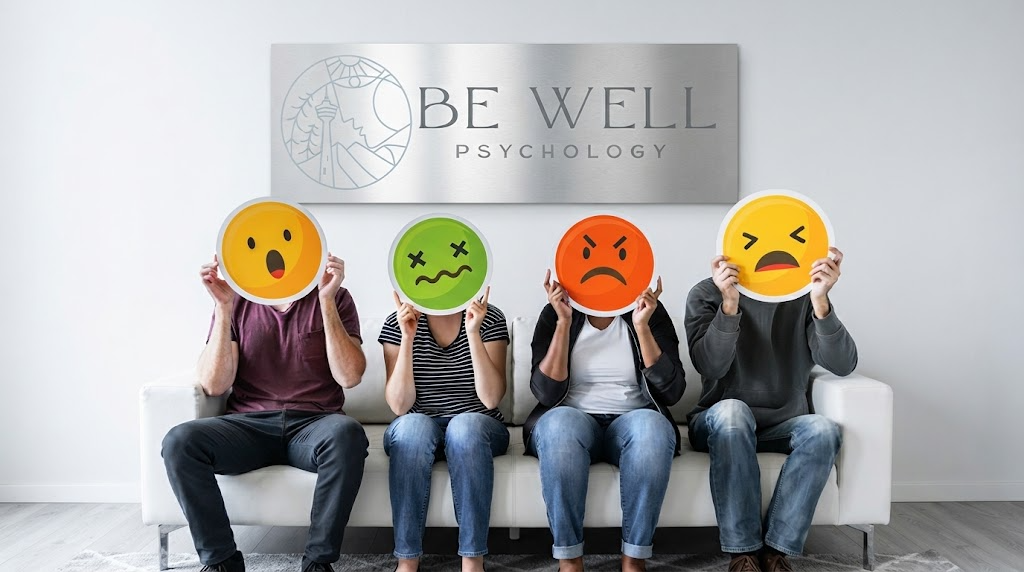
Everyone has moments when emotions feel bigger than they should: a flash of anger that lingers for hours, anxiety that spirals before a big meeting, or sadness that shows up and refuses to leave. These experiences are part of being human. But when strong emotions consistently take over, disrupting relationships, work, or daily functioning, it may be time to look more closely at how those emotions are being managed. This is where emotional regulation therapy comes in a structured, evidence-based approach to understanding and responding to emotions in healthier, more sustainable ways.
This guide from BeWell Psychology breaks down what emotional regulation really means, why it matters, and practical, therapist-backed strategies for building stronger emotional regulation skills over time.
What Is Emotional Regulation?
Emotional regulation refers to the ability to recognize, understand, and manage emotional responses in a way that’s appropriate to the situation. It doesn’t mean suppressing feelings or pretending everything is fine, it means having the internal tools to experience an emotion fully without being overwhelmed or controlled by it.
Someone with strong emotional regulation skills can feel frustrated without lashing out, feel anxious without avoiding everything that triggers it, and feel sad without spiraling into hopelessness. It’s not about eliminating difficult emotions; it’s about responding to them in ways that align with one’s values and long-term wellbeing, rather than reacting impulsively in the moment.
Why Do Some People Struggle More Than Others?
Emotional regulation isn’t something people are simply born knowing how to do well, it’s a skill, shaped over time by genetics, environment, and experience. Several factors can make regulation harder:
- Early life experiences: Children who grow up in unpredictable, invalidating, or high-conflict environments often don’t get the chance to learn healthy regulation strategies modeled for them.
- Trauma: Past trauma can leave the nervous system on high alert, making emotional responses feel more intense and harder to control.
- Mental health conditions: Anxiety, depression, ADHD, and borderline personality disorder are all associated with greater difficulty regulating emotional responses.
- Chronic stress: Ongoing stress depletes the mental resources needed to pause and respond thoughtfully, making reactive behavior more likely.
- Neurodivergence: Some individuals, including those with autism or ADHD, may experience emotions more intensely or have differences in how the brain processes and manages emotional input.
Understanding the why behind emotional struggles is often the first step in therapy not to assign blame, but to build a foundation for real, lasting change.
Signs That Emotional Regulation Might Be a Struggle
It’s not always obvious that difficulty with emotional regulation is at the root of a problem. Common signs include:
- Emotional reactions that feel disproportionate to the situation
- Difficulty calming down once upset, even after the triggering event has passed
- Frequent conflict in relationships due to emotional outbursts
- Avoiding situations that might trigger strong feelings
- Turning to unhealthy coping mechanisms like substance use, self-harm, or emotional eating to manage distress
- Feeling emotionally numb or disconnected as a way of avoiding overwhelming feelings
- Regret after reacting impulsively during emotional moments
If several of these resonate, it may be worth exploring coping skills therapy with a trained mental health professional.
How Emotional Regulation Therapy Works


Therapy focused on emotional regulation draws from several well-researched approaches, often blended together based on individual needs.
Dialectical Behavior Therapy (DBT)
DBT was originally developed to treat borderline personality disorder but has since become one of the most widely used approaches for emotional regulation difficulties in general. It teaches four core skill sets: mindfulness, distress tolerance, emotion regulation, and interpersonal effectiveness. DBT is particularly effective for people who experience intense, rapidly shifting emotions.
Cognitive Behavioral Therapy (CBT)
CBT helps individuals identify the thought patterns that fuel emotional reactions. By recognizing and challenging distorted or unhelpful thinking, clients learn to interrupt the cycle between a triggering thought and an intense emotional response.
Acceptance and Commitment Therapy (ACT)
ACT focuses on accepting difficult emotions rather than fighting them, while committing to actions that align with personal values even when uncomfortable feelings are present. This approach is especially helpful for people who tend to avoid emotional discomfort altogether.
Somatic and Nervous-System-Based Approaches
For individuals whose emotional dysregulation is tied to trauma, therapy may also include body-based techniques that help calm an overactivated nervous system, since intense emotional responses often show up physically before they’re even consciously recognized.
Practical Emotional Regulation Techniques to Try
While therapy provides personalized, long-term support, there are several emotional regulation techniques that can be practiced independently and often serve as a helpful complement to professional support.
1. Name the Emotion
Simply labeling what you’re feeling. I’m feeling anxious or I’m feeling really frustrated right now activating areas of the brain involved in reasoning and can reduce the intensity of the emotional response almost immediately. This practice is sometimes called affect labeling.
2. Use the Pause
Before reacting, try to create even a small gap between the emotional trigger and the response. Taking a few slow breaths, counting to ten, or simply stepping away from the situation for a moment can prevent impulsive reactions that are later regretted.
3. Practice Grounding Techniques
Grounding exercises like the 5-4-3-2-1 method (identifying five things you can see, four you can touch, three you can hear, two you can smell, and one you can taste) help bring attention back to the present moment when emotions start to feel overwhelming.
4. Reframe the Thought
Ask whether there’s another way to interpret the situation. Cognitive reframing doesn’t mean ignoring reality, it means challenging automatic, often exaggerated interpretations that intensify emotional distress.
5. Build a Regulation Toolkit
Different situations call for different strategies. A helpful toolkit might include physical movement (like a short walk), sensory tools (like a weighted blanket or calming scent), creative outlets (like journaling or drawing), and social support (reaching out to a trusted friend).
6. Address the Body, Not Just the Mind
Emotional intensity is often tied to physical arousal — a racing heart, shallow breathing, muscle tension. Techniques like deep breathing, progressive muscle relaxation, or even splashing cold water on the face can help calm the body’s stress response, making it easier to think clearly.
7. Practice Self-Compassion
Many people are their own harshest critics when emotions run high, which often makes things worse. Treating yourself with the same patience and understanding you’d offer a friend can reduce shame and support faster emotional recovery.
Managing Strong Emotions in the Moment
When emotions feel especially intense, it helps to have a simple, memorable process to fall back on. A common framework used in managing strong emotions looks something like this:
- Notice – Recognize that a strong emotional response is happening.
- Pause – Resist the urge to react immediately.
- Breathe – Slow, deep breaths signal safety to the nervous system.
- Name it – Identify the specific emotion as clearly as possible.
- Choose – Decide on a response that aligns with your values, rather than reacting purely on impulse.
With practice, this process becomes faster and more automatic, even during genuinely difficult moments.
When to Seek Professional Support
Self-guided strategies can be genuinely helpful, but some situations call for more structured, professional support. Consider reaching out to a therapist if:
- Emotional outbursts are damaging relationships or work performance
- Strong emotions are leading to unsafe coping behaviors
- You feel stuck in patterns you can’t seem to change on your own
- Past trauma seems to be fueling current emotional reactions
- Emotional overwhelm is interfering with daily functioning
A therapist trained in emotional regulation can help identify the specific patterns at play and build a personalized plan often incorporating a combination of the approaches and techniques outlined above.
Final Thoughts

Emotional regulation isn’t about becoming emotionless or suppressing what you feel, it’s about developing the skills to experience emotions fully while still responding in ways that serve your wellbeing and relationships. Whether through self-guided practice or structured coping skills therapy, building stronger regulation skills is entirely possible at any stage of life.
Change doesn’t happen overnight, and that’s okay. Every small pause, every moment of naming an emotion instead of reacting to it, is a step toward greater emotional resilience and a calmer, more intentional way of moving through the world.
Contact BeWell Psychology to learn more about emotional regulation therapy and take the first step toward better coping skills.
Frequently Asked Questions
What’s the difference between emotional regulation and emotional suppression?
Regulation means experiencing an emotion and choosing a healthy response; suppression means pushing the feeling away entirely, which often backfires over time.
Can emotional regulation skills really be learned as an adult?
Yes. The brain remains adaptable throughout life, and with practice or therapy, new emotional habits can be built at any age.
How long does emotional regulation therapy typically take?
It varies by individual, but many people notice meaningful progress within 8 to 16 sessions, depending on the underlying causes.
Is DBT only for borderline personality disorder?
No. While DBT was developed for BPD, its skills are now widely used for anxiety, depression, and general emotional dysregulation.
What should I do if I feel emotionally overwhelmed right now?
Try pausing, taking a few slow breaths, and naming the emotion out loud this alone can reduce its intensity in the moment.