
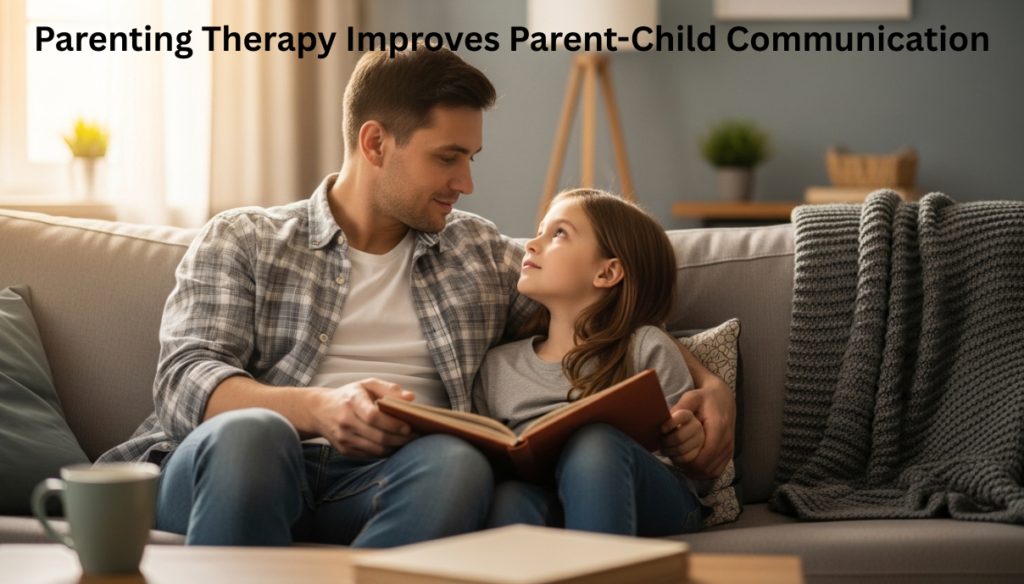
Many parents don’t realize how quickly communication at home can become strained. What starts as small misunderstandings, short answers, emotional reactions, or silence can slowly turn into distance between parents and children. In many families, it’s not a lack of love that creates this gap, but difficulty expressing it in a way that feels heard and understood.
At Be Well Psychology, this pattern is something therapists often see across families of all backgrounds. Parents care deeply about their children, but everyday stress, emotional reactions, and communication habits can unintentionally create barriers.
This is where parenting therapy can make a meaningful difference. It is not about labeling parents as doing something wrong, but about helping families understand each other better. Through guided support, parents learn how to respond to challenges with more clarity, patience, and emotional awareness.
At its core, parenting therapy focuses on strengthening parent-child communication and rebuilding emotional connection. It offers practical tools for everyday situations whether that’s handling conflict, managing emotions, or simply improving conversations at home. Over time, families often notice not just fewer arguments, but more trust and understanding in daily life.
This article explores how therapy supports families, what it involves, and why it can be a valuable step toward healthier relationships.
Understanding Parenting Therapy
Parenting therapy is a structured form of counseling designed to support parents in understanding their child’s emotional and behavioral needs. It is often offered through family-focused mental health services such as those provided by Be Well Psychology.
Unlike general advice from books or social media, parenting therapy is personalized. It considers your family dynamics, your child’s personality, and your specific challenges at home. The goal is not perfection, it is connection.
In many cases, therapy focuses on:
- Improving communication patterns between parents and children
- Understanding emotional triggers in both parents and kids
- Developing consistent and healthy boundaries
- Reducing conflict and misunderstandings
- Strengthening emotional safety within the home
One important point is that parenting therapy is not only for serious problems. Many families seek support simply because they want to improve how they relate to each other before issues become larger.
Why Parent-Child Communication Breaks Down
Even in loving families, communication can become difficult over time. Children grow, emotions change, and expectations evolve. Without realizing it, parents and children may start interpreting each other in ways that create tension.
Some common reasons include:
Emotional overload
Parents often manage work, finances, and household responsibilities all at once. When stress builds up, responses can become reactive instead of thoughtful.
Misunderstood behavior
A child’s silence, anger, or withdrawal is often interpreted as disrespect or defiance, when it may actually be stress, confusion, or emotional overwhelm.
Generational communication gaps
Parents and children may express feelings very differently. What feels normal for one generation may feel dismissive or intense for another.
Lack of structured conversation
Many families talk, but fewer truly communicate. Conversations may focus on instructions or corrections rather than feelings and understanding.
Over time, these patterns can weaken parent-child communication, even when both sides care deeply. Therapy helps identify these patterns clearly so they can be changed with intention.
How Parenting Therapy Improves Communication
One of the most important outcomes of family communication therapy is learning how to speak and listen differently. This doesn’t mean using perfect words, it means creating space for understanding.
Learning to listen with intention
Parents are often used to solving problems quickly. Therapy helps shift this mindset toward listening first, understanding emotions before reacting.
Responding instead of reacting
A key skill taught in counseling for parents is pausing before responding. This small shift can prevent misunderstandings from escalating.
Using clearer emotional language
Instead of statements like You never listen, therapy encourages more specific communication such as I feel worried when I don’t know how you’re feeling.
Building consistent communication habits
Families learn to create small, regular moments of connection daily check-ins, shared conversations, or structured family talks.
Over time, these changes can transform the emotional tone of the household. Communication becomes less about correction and more about connection.
Emotional Bonding with Children
Strong communication naturally leads to deeper emotional bonding with children, but emotional connection also requires intentional effort.
Children are highly sensitive to emotional cues. They often remember how they felt during interactions more than the exact words used. When they feel heard and emotionally safe, they are more likely to open up.
Therapy often encourages parents to:
- Acknowledge feelings before offering solutions
- Validate emotions even when behavior needs correction
- Spend intentional, distraction-free time with children
- Show consistency in support and boundaries
These small shifts build emotional safety. Over time, children begin to trust that they can express themselves without fear of judgment or rejection.
This kind of bond doesn’t eliminate conflict, but it makes conflict easier to navigate. Children feel secure enough to communicate, and parents feel more confident responding calmly.
Common Mistakes Parents Make Before Therapy

Before seeking support, many parents unintentionally fall into patterns that make communication harder.
Trying to fix instead of understand
Parents often jump into problem-solving mode too quickly, without fully understanding what the child is feeling.
Inconsistent responses
When reactions change depending on stress or mood, children may become confused about expectations.
Emotional disconnection during discipline
Discipline is sometimes delivered without emotional explanation, which can feel like rejection rather than guidance.
Ignoring small emotional signals
Small signs withdrawal, irritability, silence are often overlooked until they become larger issues.
Recognizing these patterns is not about blame. It is about awareness. Once parents see these habits clearly, they can begin to change them with support.
What Happens in Parenting Counseling Sessions
Many parents feel unsure about what actually happens in counseling for parents. In reality, sessions are practical, reflective, and focused on real-life situations.
A typical session may include:
- Discussing recent family challenges
- Exploring emotional reactions from both parent and child
- Identifying communication patterns
- Learning specific strategies for difficult situations
- Practicing new ways of responding
Therapists may also provide tools for managing stress, since parenting challenges often increase when parents feel overwhelmed.
Importantly, therapy is collaborative. Parents are not judged they are guided. The goal is to create realistic changes that fit into daily family life.
Practical Insights for Parents
Here are a few simple practices often encouraged in therapy:
- Pause before responding during emotional moments
- Ask open-ended questions instead of yes/no questions
- Spend 10–15 minutes of undivided attention with your child daily
- Reflect feelings back (“That sounds frustrating”) before responding
- Keep communication consistent, even during conflict
These steps may seem small, but they often create noticeable improvements in family communication therapy outcomes over time.
Conclusion

Parenting is one of the most meaningful roles a person can take on, but it is also one of the most emotionally complex. When communication breaks down, it can affect the entire family dynamic.
Parenting therapy offers a supportive space to rebuild understanding, strengthen emotional bonds, and improve everyday communication. It is not about changing who you are as a parent, but about helping you connect more effectively with your child.
With time, patience, and the right guidance, families can move from misunderstanding to connection and from conflict to trust.
If you feel that communication at home has become challenging, reaching out for professional support can be a helpful step. You can contact us at Be Well Psychology to learn more about how parenting support and counseling can help your family build stronger, healthier relationships.
FAQs
1. What is parenting therapy used for?
Parenting therapy helps parents improve communication, manage behavioral challenges, and build stronger emotional connections with their children.
2. Can therapy improve parent-child communication?
Yes, therapy provides practical tools to help parents and children understand each other better and reduce miscommunication.
3. Is parenting counseling only for serious problems?
No, many families use counseling for early support, guidance, and improving everyday family interactions.
4. How long does parenting therapy take?
The duration varies depending on family needs, but many parents notice gradual improvements within a few sessions.
5. Does parenting therapy involve the child?
Sometimes yes, depending on the situation. Some sessions involve only parents, while others include children or the whole family.